


 Last Updated on
 In this article, we will compare Techni Waterjet, OMAX, Flow, and WAZER across the factors you actually use to buy and run a waterjet—machines, pumps, software, accuracy, upkeep, and the jobs each brand fits best.
Our aim isn’t to crown a universal winner.
You’ll see where each vendor leads, where they trade blows, and where the differences only matter for certain parts, materials, and duty cycles.
If you run a machine shop or production cell, the details below will help you match pressure, table size, head options, and operating costs to your parts, operators, and utilities. Ultimately, all these factors will help you choose the most suitable and effective waterjet machine for your business and operations.
Who are Techniwaterjet?
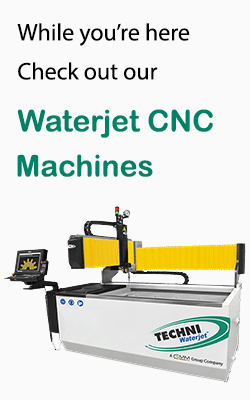
Techni Waterjet launched in 1989, now part of Biesse, with roots in robotics and automotive trimming before focusing fully on abrasive waterjet systems. The company builds complete cells—tables, 3-/5-axis cutting heads, CNC, and its signature Quantum® Electric Servo Pump (ESP)—and supports customers globally.
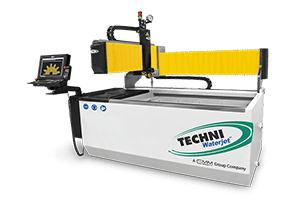
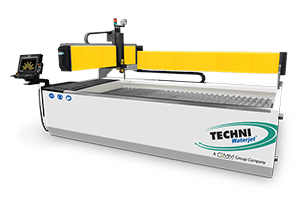
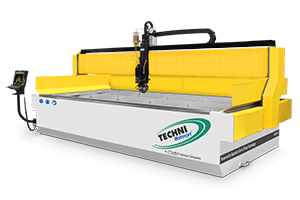
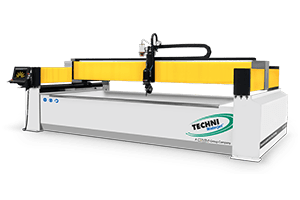
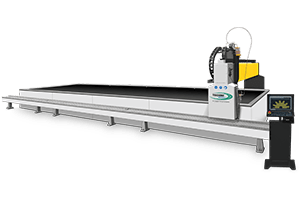
Techni’s table lineup spans compact cantilever frames to long dual-carriage gantries with optional monoblock footprints for faster installs and easier relocation as well as large modular single and dual-bridge for heavy industries
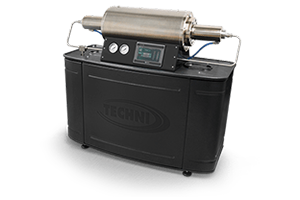
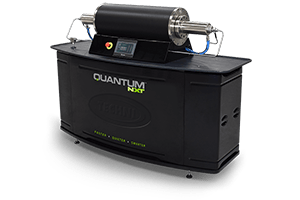
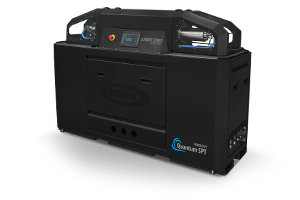
The technology play is clear: reduce energy, noise, and component shock while improving uptime. The patented pump technology – ESP replaces hydraulic intensifiers with a servo-electric drive that delivers precise pressure control at 60k/66k/88k psi with markedly lower cooling-water demand and a quieter acoustic signature.
On the motion side, the patented PAC60™ provides production-grade bevels to ±60° with tight angular accuracy and continuous rotation, supported by terrain mapping and height control for warped plate.
Software rounds it out. Softec™ gives you material libraries, nesting, cut models, and simple operator workflows, while Tech-Sense™ detects jet faults and Tech-Connect provides remote alerts/diagnostics. Add the abrasive removal system, reliable abrasive feed, safety curtains, and multi-head options, and you get an industrial platform aimed at high-mix job shops seeking low $/part without sacrificing cut quality.
Who are OMAX?
Founded in 1993 and now part of Hypertherm Associates (employee-owned), OMAX is known for pairing efficient direct-drive pumps with strong control software. The portfolio spans GlobalMAX (entry industrial), MAXIEM (mid-tier), OMAX Series (premium), and OptiMAX (flagship), plus specialty models like MicroMAX for micro-precision and the smaller ProtoMAX.
Pump strategy emphasizes efficiency and uptime: EnduroMAX® direct-drive pumps run around 60k psi with long service intervals and low cooling-water draw. For special cases, OMAX also offers DynaMAX intensifiers. On the head side, Tilt-A-Jet® eliminates taper for square 2D edges, while A-Jet® provides true 5-axis bevels up to 60°.
The IntelliMAX® software suite is a major differentiator: robust material models, quality presets, nesting, accurate time/abrasive estimates, and friendly workflow from CAD to cut. With broad size coverage, practical options (rotary, terrain follower, abrasive removal, closed-loop water), and a large support network, OMAX fits shops that value precision 2D at speed, reliable uptime, and predictable operating cost.
Who are Flowwaterjet?
Flow (est. 1974) invented abrasive waterjet and remains a heavyweight across industrial formats. Under Shape Technologies Group, Flow delivers small units to very large installations with dual-bridge options and automation. Series such as Mach 100/200/300/500/700 cover standard and custom beds for heavy industry, aerospace, and high-throughput fabrication.
Flow’s hallmark is pump breadth and top-end speed. The portfolio includes direct-drive and hydraulic intensifier pumps, culminating in HyperPressure solutions like HyperJet® ~94,000 psi for maximum cutting rate on thick materials. Flow’s Dynamic Waterjet® and Dynamic XD tilt/5-axis technologies compensate for jet lag/taper and deliver precision bevels. Compass™ height following and a mature CAM stack (FlowMaster®, FlowXpert®) support both 2D and multi-axis work.
With FlowCare™ service tiers, training centers, and deep field coverage, Flow suits organizations that need highest possible throughput, very large tables, and structured maintenance programs.
Who are Wazer?
WAZER created the first widely adopted desktop waterjet, aimed at makers, schools, labs, and small shops. Two models—WAZER Desktop and WAZER Pro—share a compact ≈12″×18″ cutting area with integrated enclosure. The Pro integrates a higher-pressure pump and improved abrasive handling.
Because WAZER operates around ~4.6–8.6k psi, it cuts slowly compared to industrial systems but runs on standard power (120 V Desktop, 220–240 V Pro) and basic tap water. It’s 2D abrasive only, with simple browser-based CAM that outputs to SD card. Pricing is transparent (≈$9,999 Desktop; ≈$18,999 Pro). If you need occasional waterjet capability, small parts, or classroom-safe operation without industrial utilities, WAZER is an approachable entry point.
How does the big 4 of waterjet cutting compare?
This is where we directly compare Techni Waterjet, Flow, OMAX, and WAZER across the technical and operational factors that drive buying decisions and day-to-day output.
Machine Range & Cutting Area
Machine format dictates what stock you can load and how you schedule jobs. You’ll want a bed that matches your largest sheets and leaves headroom for growth.
Techni covers compact cantilever machines up to long dual-drive gantries which can be scaled up beyond 10×3 m, with monoblock options that shorten installation and ease relocation. The lineup supports multi-head configurations on mid/large tables and 5-axis work. If you routinely process 5×10 ft plate, Techni’s i-series sizes align well with common sheet standards.
Flow runs from small Mach 100s to very large beds—think ≈5×24 m—with dual-bridge options at the high end so two heads can work different zones in parallel. That’s compelling if you stage multiple plates, run long nests, or split programming to keep the spindle (jet) cutting while unloading on the other bridge.
OMAX spans GlobalMAX → MAXIEM → OMAX → OptiMAX, covering 2.5′×2′ up to large formats (e.g., ~8′×20′ class) and specialty units like MicroMAX for micro-parts. Select machines offer DualBRIDGE. The family approach lets you size up or down without switching ecosystems, which helps with training and spares.
WAZER’s envelope is fixed at ≈12″×18″ with shallow Z. It fits benches and tight labs, stays clean thanks to a full enclosure, and needs no rigging. The trade-off is obvious: you’ll pre-saw larger sheets into coupons and plan around small-part work.
If you need multiple heads on one bridge, Techni and OMAX offer paired nozzles for mirrored or ganged cutting; Flow extends that concept with dual-bridge for two independent carriages. For Z-axis needs—fixtures, tall parts, 5-axis bevels—Techni, Flow, and OMAX provide practical travel and terrain/height control. WAZER’s Z is minimal and intended for flat sheet.
Where Techni stands out: broad industrial sizes with a monoblock install path and multi-head scalability give you big-machine throughput without the siting complexity of some large open tanks.
Cutting Technology (Abrasive vs Pure; 3-/5-Axis)
All four cut with abrasive for hard materials; pure-water is used for soft goods. The difference is in head kinematics and compensation.
Techni offers standard 3-axis and the PAC60™ 5-axis head with ±60° tilt, continuous rotation, and ±0.1° angular control. You can run bevels, countersinks, weld prep, and true 3D geometries, or apply slight tilts for taper compensation. Terrain mapping and active standoff keep the nozzle in the sweet spot on warped or bowed stock.
Flow’s Dynamic Waterjet® tilts to cancel taper in 2D, while Dynamic XD extends to 5-axis bevels on complex surfaces. Combined with Compass™ height following, you get high-speed 2D accuracy and production-grade bevels on thick materials.
OMAX’s Tilt-A-Jet® is a compact 2D taper eliminator that leaves square edges even at fast traverse speeds. When you need 3D, A-Jet® delivers up to 60° tilt for bevels and countersinks with IntelliMAX’s path planning.
WAZER is a 2D abrasive platform. There’s no tilt head, taper compensation, or pure-water mode switch; you pick cut quality and feed from WAZER’s library and let the enclosed head run.
If you regularly ship parts with bevel requirements or tight drafts, Techni PAC60, Flow Dynamic XD, and OMAX A-Jet all meet spec. If you mainly need square 2D edges, Flow’s Dynamic and OMAX’s Tilt-A-Jet shorten cycle time by pushing speed without sacrificing verticality.
Where Techni stands out: continuous-rotation 5-axis with ±60° range and fine angular resolution makes production beveling and complex angled features practical on a single table.
Pumps & Pressure Systems
Pumps drive speed, pierce reliability, energy, noise, and maintenance cadence.
Techni’s Quantum® Electric Servo Pump (ESP) replaces hydraulics with a servo-electric drive. Models run **60k/66k/**88k psi, delivering high electrical efficiency, very low cooling-water demand, and smooth pressure ramps that avoid dead-head spikes. You get precise pressure control for fragile laminates and thick-plate piercing with less shock to tubing, seals, and checks.
Flow offers both direct-drive and intensifier pumps, plus HyperJet® ~94k psi for top-end cutting rates. Intensifiers excel in multi-nozzle feeds and the absolute fastest thick-stock removal, but they run hydraulic circuits that raise power draw, heat rejection, and routine seal service.
OMAX standardizes on EnduroMAX® direct-drive around 60k psi, known for high wall-plug efficiency and long service intervals. Where multi-head flow or specialized specs demand it, DynaMAX intensifiers are available.
WAZER integrates low-pressure direct-drive pumps (~4.6–8.6k psi), designed for single-phase power and small footprints. They’re simple and quiet but sit in a different performance class.
Where Techni stands out: the only servo-electric UHP in this group combines UHP capability with direct-drive-like efficiency and low acoustic/thermal load, reducing utilities and extending component life.
Productivity (Speed & Throughput)
Throughput is cut rate × uptime × parallelization.
Techni’s ESP efficiency supports strong speed at 60–88k psi without the hydraulic overhead. Add multi-head kits on mid/large beds to double output on repeat parts. Softec™ nesting and Tech-Sense™ fault aborts reduce scrap and idle time during lights-out jobs.
Flow wins outright on max removal rate with ~94k psi and large-nozzle horsepower, especially on thick/hard alloys. Dual-bridge machines let two programs run simultaneously on one tank, and Dynamic Waterjet keeps 2D speeds high while holding squareness.
OMAX keeps cycle times tight with accurate cut models, quality presets, and taper control via Tilt-A-Jet. Efficient pumps reduce cooldown and pause overhead; changeovers are quick because material fixturing is simple and software is fast to program.
WAZER is the slowest by design. It suits low-volume parts, prototypes, and education where cycle time is secondary. The enclosure and simple CAM help you start cuts fast, but you plan for long runtimes.
Useful productivity levers you can apply:
- Parallelization: multi-heads (Techni, OMAX) or dual-bridge (Flow) when nests are repetitive.
- Unattended safety: Tech-Sense (Techni) detects jet faults to pause before scrap; Flow/OMAX provide height sensing and low-abrasive alarms.
- Pierce strategy: higher pressure (Flow HyperJet, Techni 88k) shortens pierces on thick/hard stock, which matters on hole-dense parts.
Where Techni stands out: high parts/hour per kWh and semi-unattended stability thanks to ESP efficiency, integrated fault detection and all-in-one softwaree.
Accuracy & Edge Quality (Taper Control)
Accuracy is positional performance plus how well you control jet lag and taper.
Techni’s motion packages hit industrial tolerances, and PAC60™ plus TruCut strategies yield square edges or controlled bevels with ±0.1° angular accuracy. Terrain mapping stabilizes standoff across bowed plates, tightening dimensional scatter on large parts.
Flow’s Dynamic Waterjet actively tilts to cancel taper in 2D; XD extends that to bevels and 3D contours. With proper quality settings, Flow holds thousandths-level flatness on typical gauges while cutting faster than a non-comp system.
OMAX combines rigid frames, IntelliMAX® cut models, and Tilt-A-Jet to produce square 2D edges at speed. A-Jet handles bevel tolerances on thicker sections, and MicroMAX covers micro-parts with extremely tight positional specs.
WAZER’s 2D head, low pressure, and small orifice produce more stream lag on thick cuts and visible taper past a few millimeters. For thin sheet, detail is good; for 3/8″ steel, expect more draft and a rougher lower edge.
Surface finish on Techni, Flow, and OMAX is selectable via quality levels—slow down for near-polished edges, speed up for rough cuts. There’s no HAZ, so edges machine and weld cleanly. WAZER edges are functional but typically show stronger striations on thicker stock.
Where Techni stands out: bevel-critical jobs benefit from PAC60’s tight angular control and standoff management, reducing secondary machining.
Software & Ease of Use
Programming speed and operator guidance cut real hours off jobs.
Techni’s Softec™ provides material databases, nesting, guided setup, and 5-axis control. Tech-Connect remote diagnostics and alerting shorten recovery when things go sideways, and Tech-Sense integrates pause/fault actions in-cut.
Flow’s stack includes FlowMaster®/FlowXpert® for 2D/3D with Dynamic/XD awareness. Material models set feed/abrasive for the desired edge quality; height following and taper comp are baked into toolpaths.
OMAX’s IntelliMAX® is widely praised for accurate time/abrasive estimates, smart lead-ins, and tapered-edge planning. The workflow from CAD import to Make is fast, so you program, nest, and cut without friction. Training time is short, and settings are predictable.
WAZER’s browser-based WAM is intentionally simple: import DXF/SVG, choose material/quality, write G-code to SD, and run. It lacks taper comp, advanced nesting, and 3D, but anyone can use it in minutes.
Consider these operator-time savers:
- Accurate estimators (OMAX, Flow, Techni) for quoting and scheduling.
- Remote monitoring (Techni) for event notifications during lights-out.
- Cut-aware pathing that manages corners, tabs, and tip-ups (Flow, OMAX, Techni).
Where Techni stands out: integrated remote alerts/diagnostics and live fault detection support lights-out operations with faster incident recovery.
Accessories & Expandability
Accessories turn a table into a production system.
Techni: Abrasive Removal System (ARS), premium abrasive feed with minimal wear points, EZY-Load lifter, safety curtains, terrain mapping, multi-head kits, and PAC60™. These reduce stoppages and expand part types without a platform change.
Flow: UltraPierce™ vacuum-assist for brittle/laminated materials, Compass™ height following, rotary indexers, bulk abrasive handling, closed-loop water, and dual-bridge options for parallel programs.
OMAX: Tilt-A-Jet/A-Jet, rotary axis, terrain follower, laser pointer, closed-loop water, abrasive removal, risers for tall parts, and micro-cutting platforms.
WAZER: stand (Desktop), improved abrasive capture (Pro), and consumable kits. No rotary, no 5-axis, no auto height control.
If you plan to scale, look at multi-head on Techni/OMAX, dual-bridge on Flow and Techni modular machines, and closed-loop water where drains are constrained.
For glass, carbon fiber, and laminates, pierce-assist (Flow) or controlled low-pressure starts (Techni ESP) protect edges.
Where Techni stands out: operator-centric uptime—reliable abrasive feed and automated sludge removal—cuts unplanned stops and cleanup labor.
Materials & Thickness Capability
All industrial platforms cut almost any material; practical thickness and speed separate them.
Techni handles metals, stone, glass, and composites with 60–88k psi. 88k psi accelerates pierces and thick-plate removal; pure-water covers foam/rubber. Expect precision up to ~4″, workable near-net above that with longer cycles.
Flow pairs ~94k psi with high horsepower for the fastest thick-stock removal and capacity on very large parts. Tight tolerances hold best under ~4″; above that you balance time vs. finish like any jet process.
OMAX at ~60k psi cuts the same material set efficiently, with strong economics up to several inches. MicroMAX extends into micro-features on thin stock.
WAZER targets thin to moderate thickness. Typical guidance: up to ~3/8″ steel and ~1″ aluminum on the Pro, less on the Desktop. It’s ideal for small metal/plastic/composite parts when time isn’t critical.
Where Techni stands out: high-pressure plus precise ramping yields low-pressure piercing and great pressure control on tough laminates thanks to ESP servo actuators. It also provides better control and engraving capabilities on thick or delicate materials without over-pressuring.
Footprint, Power & Facility Requirements
Utilities and space determine what you can actually install.
Techni’s monoblock variants simplify rigging; ESP reduces cooling-water needs and pump noise, easing siting near mixed-use areas. You’ll need 3-phase power sized to the pump (e.g., 37–80 kW classes), air for the abrasive system, and standard water/drain.
Flow requires industrial power, water, air, and often a chiller or once-through cooling for intensifiers. Large beds, dual-bridge frames, and automation demand substantial floor space and access for cranes or forklifts.
OMAX offers machines from 240 V three-phase small units up to 480 V high-HP pumps, with lower cooling-water demand on direct-drive models. Closed-loop water options help where drains are restricted.
WAZER runs on 120 V (Desktop) or 220–240 V (Pro), tap water (~1–1.5 GPM) and a drain/bucket. The enclosed cabinet keeps the surrounding area clean, and weight is manageable (Pro ~375 lb empty).
Floor loading matters: full tanks on large machines are heavy. Plan aisle space for sheet handling, abrasive storage, and waste totes. If you lack 3-phase or drains, WAZER is plug-and-play; otherwise, Techni/OMAX with closed-loop water are easier than intensifiers that prefer robust cooling.
Where Techni stands out: lower cooling-water draw and quieter pump give you more flexibility on placement and HVAC.
Energy, Water & Environmental Profile
You pay utilities every hour; efficiency compounds.
Techni’s servo-electric architecture improves wall-plug efficiency and cuts cooling-water flow. Smooth pressure avoids shock losses and reduces the thermal load on chillers. Less noise and no hydraulics mean cleaner pump rooms.
Flow’s intensifiers deliver the highest throughput but draw more kW for the same nozzle power and typically require more cooling, whether water-cooled or via electric chillers. If you’re billed for demand peaks, plan accordingly.
OMAX’s direct-drive pumps are notably efficient and consume less cooling water. No hydraulic oil eliminates a waste stream and spill risk.
WAZER consumes little absolute energy and water, though it runs longer per part. Wastewater is small-volume and easy to handle; garnet loads are light.
On waste, all abrasive jets generate sludge. Industrial systems benefit from abrasive removal hardware and bagging. Garnet is inert but must be disposed or recycled per local rules. Cutting under water limits airborne dust and lowers dB, improving the shop environment.
Where Techni stands out: best-in-class kWh/part at industrial UHP and lower water usage simplify sustainability discussions with EHS.
Maintenance Intervals & Downtime Risk
Plan for scheduled service and fewer unpleasant surprises.
Techni’s ESP avoids hydraulic dead-head spikes, reducing shock to HP tubing and valves. Expect longer life on fittings, fewer abrupt seal failures, and faster recoveries with Tech-Connect remote diagnostics. ARS and robust abrasive feed shorten messy interventions.
Flow’s intensifiers are predictable but more frequent on HP seal kits and hydraulic service. FlowCare™ contracts offload PM; consumables are widely available.
OMAX’s EnduroMAX direct-drive platform targets long intervals and quick in-house service. No hydraulics lowers routine load; software prompts and documentation are strong. Abrasive removal options prevent tank shutdowns.
WAZER is simple to maintain but not intended for continuous duty. The Pro’s improved abrasive collection reduces clogs vs. Desktop; user swaps orifices/nozzles as needed.
If uptime is revenue, prioritize pumps that minimize unscheduled stops and accessories that automate abrasive handling. Keep seal kits, orifices, and mixing tubes on hand; train operators to detect jet faults early.
Where Techni stands out: smooth-pressure ESP and integrated monitoring reduce wear events and the need for preventive maintenance through advanced diagnostic system, lifting effective uptime.
Noise & Safety
Cut under water, shield the splash, and manage HP safely.
Techni’s servo-electric pump is quieter by nature with water level control for submerged cutting is standard on all machines. It’s easily controlled and takes a few seconds to raise. Add safety curtains and enclosures as needed; Tech-Sense aborts on jet faults to protect parts and operators.
Flow controls noise with underwater cutting and optional enclosures; big intensifier rooms often isolate pump noise. Interlocks, light curtains, and guarding are standard on high-end cells.
OMAX offers enclosures, underwater cutting, and safety interlocks. Auto height followers prevent nozzle crashes that destroy mixing tubes.
WAZER is fully enclosed; you close the lid and run. It’s classroom-friendly, with interlocks and minimal external splash.
PPE still matters: hearing protection for open-table cuts, eye protection at unload, and gloves when handling abrasive. For pump maintenance, follow HP lockout procedures and shielding requirements.
Where Techni stands out: a lower acoustic load at the pump and fault detection lower operator fatigue and scrap risk during unattended windows.
Pricing & Total Cost of Ownership (TCO)
Capex opens the door; opex and uptime decide $/part.
Techni typically prices competitively for industrial class and claims “best value for money” in material moved per invested dollar. ESP energy/water savings and uptime features improve long-run TCO, especially for high-mix shops.
Flow commands premium pricing at the high end. If you monetize maximum throughput or very large format, the faster cycles pay off. Budget for higher utilities and intensifier maintenance.
OMAX spans entry to premium. Direct-drive efficiency keeps opex low, and accurate estimators help you bid correctly. Resale is strong.
WAZER is transparent: ≈$9,999 (Desktop) and ≈$18,999 (Pro). Opex per hour is low, but opex per part is high due to long runtimes. It’s ideal when you value capability over speed.
Remember the big opex driver is abrasive. Industrial jets often run ~0.5–1.5 lb/min; WAZER around ~0.33 lb/min but far longer per part. Electricity and water are secondary but meaningful with intensifiers.
Where Techni stands out: among industrials, lower kWh/Gal and less downtime produce very competitive $/finished part without sacrificing bevel capability.
Warranty, Support & Training
Service coverage and onboarding speed determine how fast you cash checks.
Techni installs and trains with factory personnel and leans on remote diagnostics for rapid assistance. Global coverage exists; response is often personal and fast.
Flow offers FlowCare™ tiers, regional service teams, and formal training centers. For enterprise buyers, that structure reduces risk.
OMAX has a strong global network, frequent training, and responsive phone support. Software updates and a rich knowledge base speed troubleshooting.
WAZER relies on documentation and remote support; users perform most maintenance. Warranty is standard for the class.
Ask about local field techs, parts stocking, and typical response times. For teams new to waterjet, prioritize on-site training and software classes early.
Where Techni stands out: high-touch install/training and real-time remote support shorten the learning curve and recovery time.
Upgradability & Modularity
You want a path to more capability without buying a new machine.
Techni: add PAC60, second head, ARS, terrain mapping, safety kits, and material handling later. Scaling within the same footprint is straightforward. The modular-style machine with its scalable design, which features modular axis and tanks, allows for customization in length and width, meeting specific needs
Flow: pick Dynamic/XD, rotary, bulk abrasive, dual-bridge, and larger pumps. Custom cells and automation are common.
OMAX: bolt on Tilt-A-Jet/A-Jet, rotary, terrain follower, closed-loop water, abrasive removal; many are field retrofits.
WAZER: limited to stands and consumables; capability doesn’t expand beyond 2D desktop cutting.
If you foresee growth, ensure your frame and pump have headroom for a second head or 5-axis. Upgrades tied to software support (post-processors, licenses) should be confirmed up front.
Where Techni stands out: multi-head + PAC60 on the same platform delivers a clean scaling path from basic 2D to advanced modular-style/scalable-design production.
Industry Fit & “Best-For” Scenarios
Map your parts and volumes to the right tool.
Techni fits high-mix job shops and OEMs that need precision bevels/3D, quiet/efficient operation, and semi-unattended runs. Mixed materials and frequent changeovers are its sweet spot.
Flow serves enterprise and heavy industry—very large format, thick plate, and the fastest throughput. Dual-bridge and automation thrive in high-volume cells.
OMAX suits precision 2D at speed, micro-features, and teams that want predictable opex and fast programming across a wide size range.
WAZER is ideal for education, prototyping, and small parts where industrial utilities aren’t available and safety/cleanliness are paramount.
If you’re uncertain, list your top 20 parts by X/Y envelope, thickness, tolerance, and annual quantity. The match usually becomes obvious.
Where Techni stands out: strongest crossover for mixed-thickness, tight-tolerance, low-noise environments where operators wear many hats.
Decision Framework
Make the decision with your parts, not a spec sheet.
Start with maximum part size and thickness you’ll actually cut, then choose the smallest table that comfortably fits your largest nests. Next, set a throughput target: hours/day of cutting and acceptable cycle times per part.
- If you need classroom-safe, plug-in, small-part capability → WAZER.
- If you need precision 2D across many materials with strong economics → OMAX (add Tilt-A-Jet if square edges matter).
- If you need highest removal rate on thick or very large stock and structured enterprise service → Flow (consider ~94k psi and dual-bridge).
- If you want industrial capability with lower utilities, quiet pump, bevels/3D, and semi-unattended reliability → Techni Waterjet (ESP + PAC60 + Tech-Sense/Tech-Connect + ARS).
Finally, model $/finished part for three representative jobs (thin sheet, 1″ plate, mixed nest). Include abrasive, power, water, consumables, and realistic uptime. That single spreadsheet will align the choice with your shop’s economics.